
Squid Game Season 3 and Stranger Things Season 5 remain the biggest global cultural moments of the past year — but the actual record for Netflix’s most-watched show of 2026 belongs to a title neither list saw coming: “His & Hers,” a limited murder mystery starring Jon Bernthal and Tessa Thompson, which pulled in 104 million views in the first half of the year alone.
Television has evolved from appointment viewing into massive global cultural events — millions tuning in simultaneously, streaming platforms straining under record traffic, and social media flooding with memes, theories, and reactions within hours of a premiere. Here’s a full breakdown of the tv series that broke the internet, updated with the real numbers Netflix itself has since confirmed — including a genuine surprise that outperformed nearly everything else on this list.
| Show | Views (H1 2026) |
|---|---|
| His & Hers | 104 million |
| Bridgerton Season 4 | 100 million |
| Stranger Things 5 | 55.6 million |
Squid Game (Season 3) — Netflix’s Epic Finale Premiere (2025)
The third and final season of Squid Game became a global phenomenon from day one. When it debuted on Netflix in June 2025, the show dominated the platform’s Top 10 charts in every available country — a record no other series had achieved at the time. Within three days, it amassed over 60 million views and 368 million hours watched, shattering previous launch benchmarks and becoming one of Netflix’s biggest global premieres ever. Beyond the raw numbers, it triggered worldwide fan events and a fresh wave of memes and theories that dominated conversation across every major platform.
Stranger Things (Season 5) — A Massive, if Not Record-Setting, Send-Off
Stranger Things capped its run with Season 5, drawing nearly 60 million views in its opening week alone — one of the biggest English-language debut weeks Netflix had ever recorded. Here’s the update worth flagging: over the full first half of 2026, Netflix’s own official rankings placed the season’s total at 55.6 million views, ranking it fourth for the period — behind His & Hers, Bridgerton Season 4, and I Will Find You.
That’s still an enormous number for a farewell season, and the online reaction lived up to the hype, with fan theories and Easter-egg discussions dominating conversation for weeks. But it’s worth being precise: the show’s true achievement here was sustained residual viewership from a beloved franchise’s finale, not an outright new viewership record.
His & Hers — The Show That Actually Topped Netflix’s 2026 Chart
This is the addition your original list was missing entirely, and it’s a significant one. His & Hers, a limited crime mystery series starring Jon Bernthal and Tessa Thompson, became Netflix’s single most-watched television title of the entire first half of 2026, pulling in 104 million views — ahead of Bridgerton Season 4’s 100 million and well clear of any other scripted series on the platform.
Notably, the show kept accumulating meaningful viewership even after dropping out of the daily global Top 10, adding another 7.6 million views in the months following its initial peak and eventually landing on Netflix’s all-time most-watched charts. It’s a clear example of a title breaking the internet through pure word-of-mouth momentum rather than franchise recognition, since neither lead actor’s name alone would have predicted numbers this large.
Wednesday — A Trend Magnet, With a Real Caveat
Netflix’s Wednesday remains Netflix’s most successful show by some measures and turned into a genuine social media sensation, driving trending challenges, cosplay waves, and reaction content across TikTok and Instagram well beyond its initial release window. The important update here: after a nearly three-year gap between Season 1 and Season 2, viewership for the follow-up season dropped by roughly 59% — a sharp reminder that even the biggest internet-breaking phenomenon can lose significant momentum if a long wait separates seasons, something industry reporting has flagged as a broader pattern affecting Netflix’s tentpole franchises going into the back half of 2026.
Game of Thrones — The Original Internet TV Phenomenon
Long before streaming viewership metrics became mainstream news, Game of Thrones rewrote the rules for what a TV show’s online footprint could look like. Shocking character deaths and cliffhanger finales turned individual episodes into water-cooler events, sparking theories and reactions that spread globally well before real-time streaming data existed to quantify any of it. The Red Wedding alone generated reaction videos, news coverage, and social media discussion on a scale television simply hadn’t produced before, turning a single mid-season episode into a genuine cultural event rather than just another hour of programming.
HBO’s own servers famously struggled under the weight of illegal streaming demand during the show’s peak years, an unintentional but telling sign of just how much appetite existed for real-time access. Beyond individual shocking moments, the show built an entire secondary industry of theory videos, lore explainers, and fan wikis that rivaled the production values of some official promotional content. Years after its divisive finale, it remains the cultural benchmark against which “did this show break the internet” gets measured, and even its ending — polarizing as it was — generated weeks of continued discussion, proving that controversy alone can sustain internet-breaking momentum just as effectively as universal acclaim.
House of the Dragon — HBO’s Biggest Streaming-Era Premiere
HBO’s House of the Dragon entered the streaming era in spectacular fashion, drawing nearly 10 million viewers across platforms on its first night — the biggest debut for any HBO original at the time, and a clear signal that Game of Thrones’ fandom hadn’t gone anywhere in the years since the original series ended. The online reaction was immediate and intense, with fans dissecting lore and character relationships across every corner of the internet within hours of the premiere, aided by the show’s built-in advantage of an already-engaged, book-literate audience eager to compare the adaptation against George R.R. Martin’s source material.
Individual episodes routinely generated their own trending topics, with specific scenes — a shocking birth sequence, a dragon-riding sequence, a political betrayal — becoming standalone viral moments independent of the broader episode discussion. The show’s prequel status meant fans arrived already primed with theories about how established historical events from the original series would play out on screen, giving House of the Dragon a rare advantage: built-in anticipation for outcomes audiences already technically knew were coming, yet still couldn’t stop discussing in real time.
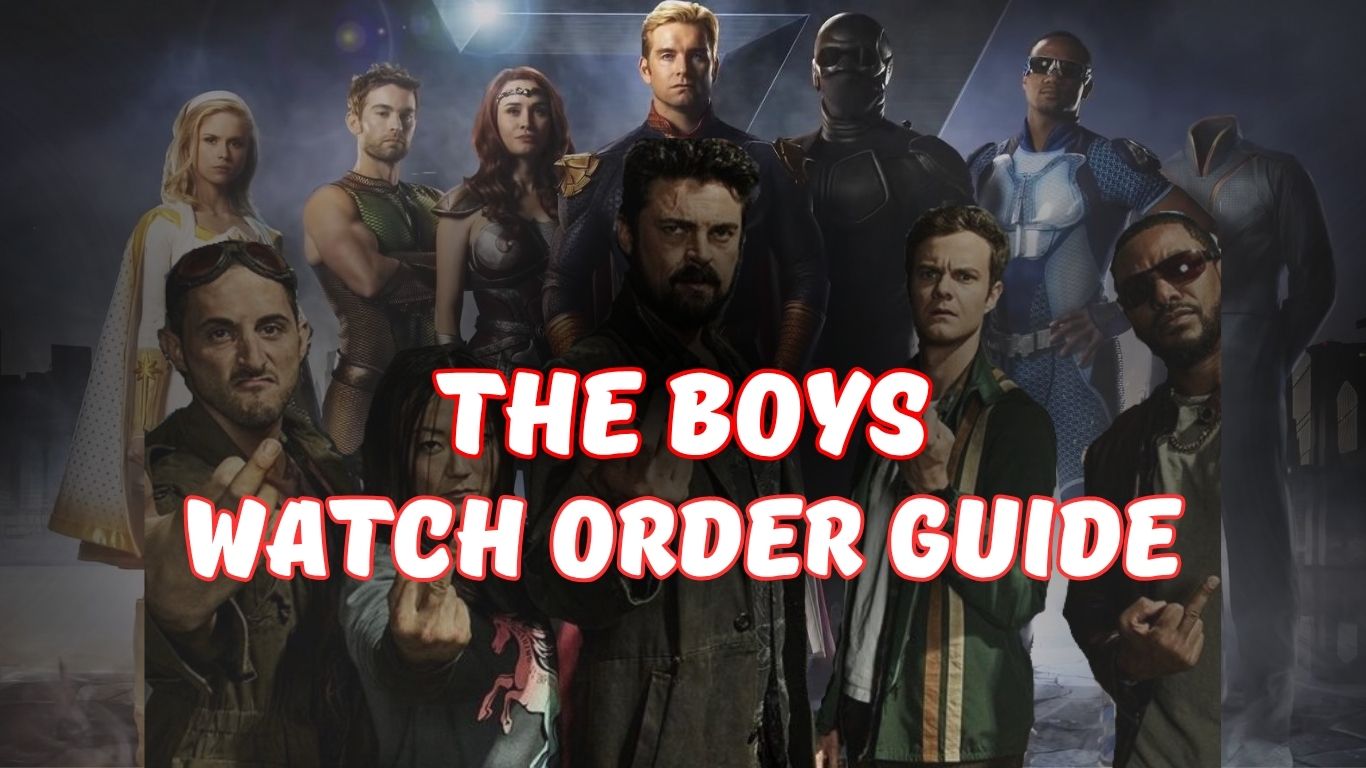
The Boys (Season 4) — Viral Numbers on Prime Video
Amazon’s The Boys surpassed 1 billion viewing minutes in its Season 4 opening week, a genuine breakthrough for Prime Video’s platform metrics and one of the clearest signs yet that the streamer could compete with Netflix and HBO in generating true event-television numbers. While it doesn’t match Netflix’s biggest global figures in absolute terms, its edgy themes, shocking scenes, and willingness to satirize real-world political and cultural flashpoints consistently ignite enormous online discussion among superhero and satire audiences alike.
The show has built a reputation for individual moments — outrageous, gory, or pointedly political — that get clipped and recirculated across social media independent of anyone actually watching the full episode, turning even non-viewers into secondhand participants in the online conversation. Its willingness to court controversy directly, rather than avoiding it, has become part of its viral engine: episodes are frequently discussed not just for what happened, but for what commentary the show was clearly making, giving The Boys a second life in political and cultural discourse well beyond typical superhero-genre discussion.
IT: Welcome to Derry — HBO Max’s Top 3 Premiere
The horror prequel IT: Welcome to Derry made a significant splash on HBO Max, ranking among the platform’s top three series premieres by viewership at launch. That achievement reflects genuine viral traction as much as raw numbers, with fan theories about Pennywise lore and rapid-fire plot-twist discussions spreading across social platforms almost immediately after release. As a prequel drawing directly from Stephen King’s expanded mythology, the show tapped into an already-active online community of horror and King enthusiasts who were primed to dissect every reference and Easter egg connecting it back to the original IT films.
Horror-specific platforms and communities, which tend to move faster and more intensely than general TV discussion spaces, amplified the show’s reach considerably, with reaction content and jump-scare compilations circulating widely on short-form video platforms within days of each new episode. The prequel format also gave it a built-in narrative hook for online discussion — fans weren’t just reacting to what happened, but actively theorizing how the events shown would eventually connect to the timeline audiences already knew from the source material.
Breaking Bad — A Legacy of Ongoing Internet Engagement
Breaking Bad never had a single release moment that literally broke the internet in the way a premiere week can, since it aired during a period before binge-culture and same-day global drops were the industry standard. But its cultural impact functions as a perpetual viral force that’s arguably outlasted shows with far bigger opening-week numbers. Years after its finale, fans continue debating character decisions — whether Walter White was ever truly sympathetic, whether Skyler was treated fairly by the fandom, whether Jesse deserved a better ending — while sharing memes, producing tribute content, and keeping the show’s most quotable lines in constant circulation across Reddit, TikTok, and dedicated podcasts.
Breaking Bad VS Better Call Saul: Which is the Best
Its spinoff, Better Call Saul, only reinforced this ongoing engagement, giving fans a fresh reason to revisit and re-litigate the original series’ events years after they first aired. Unlike shows that generate a single explosive viral moment tied to a premiere or finale, Breaking Bad’s internet presence has proven remarkably self-sustaining, making it one of the most consistently evergreen internet-TV franchises of all time — proof that breaking the internet doesn’t always require a record-setting opening weekend, sometimes it just requires a story good enough that people never stop arguing about it.
Follow us on Social Media – Just Click the Icons Below
TV series that Broke the Internet: Netflix’s Own 2026 Numbers
Zooming out, Netflix reported a record 97 billion hours of total viewing across its platform in the first half of 2026 — the highest six-month total in the company’s history. That headline number sits alongside a more complicated reality: some industry reporting has flagged an 8% year-over-year dip in overall viewership, driven partly by long gaps between seasons of major franchises. In other words, individual titles are still capable of breaking the internet in a big way, but Netflix’s ability to consistently produce back-to-back internet-breaking hits has gotten measurably harder as competitors like Apple TV+, HBO Max, and Prime Video have built their own prestige slates.
Conclusion
Whether it’s the heart-pounding tension of Squid Game, the supernatural send-off of Stranger Things, or the quieter, word-of-mouth explosion of His & Hers, these shows prove that great storytelling still transcends the screen and floods social feeds the moment it lands. What’s changed since this list was first put together is the actual record-holder — a reminder that in an industry moving this fast, “biggest show of the year” is a title that rarely stays put for long.
Which of these actually broke the internet for you personally, and did His & Hers catch you as off guard as it did the industry? Let us know in the comments.
Share on other Social Media Platforms
Fair ranking nice 👍