
Breaking Bad and Better Call Saul occupy a rare space in television history: two shows built by the same creators, set in the same universe, sharing cast members — and yet delivering two fundamentally different viewing experiences. One is an explosive, high-stakes descent into criminal empire-building. The other is a patient, aching character study of a man talking himself into becoming someone worse. Fans have argued for years over which one actually did it better. Here’s a full, category-by-category breakdown to settle the debate as fairly as it can be settled.
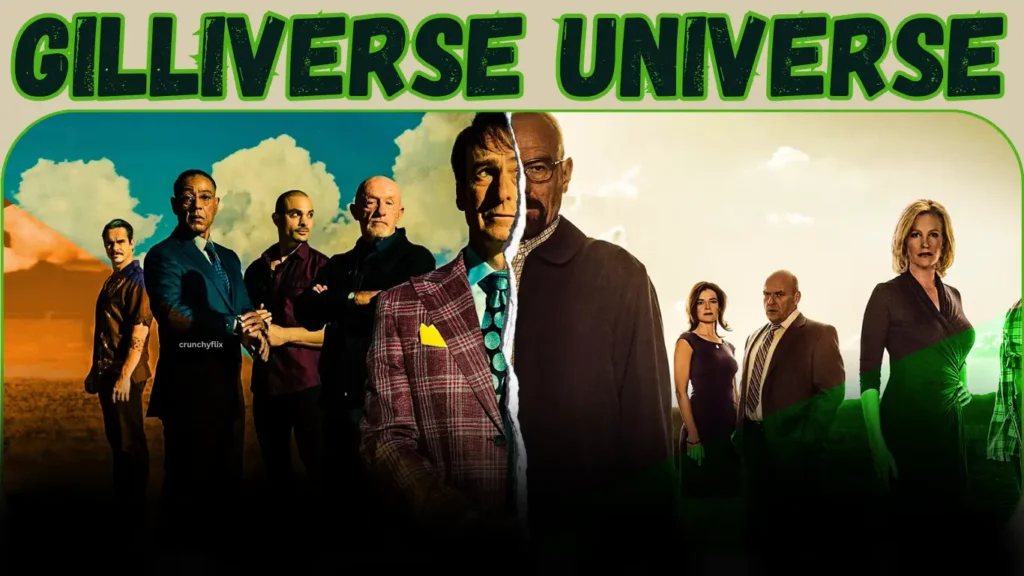
There’s no clean winner. Breaking Bad wins on pacing, iconic villains, and cultural impact. Better Call Saul wins on character depth, cinematography, and emotional payoff. Vince Gilligan and Peter Gould have both said they have no current plans for further Breaking Bad universe spinoffs — this two-show comparison is likely the complete picture for now.
Both shows come from the brilliant minds of Vince Gilligan and Peter Gould, share the same universe, and feature overlapping casts — yet they feel entirely different.
But the debate still rages across Reddit, Quora, and fan forums:
Which series actually did it better?
To answer this question, we’ll break down both shows across all major storytelling elements
Elements that Matter:
- Storytelling Approach
- Character Development
- Pacing
- Villains & Antagonists
- Cinematography & Visual Storytelling
- Emotional Payoff & Endings
- Impact on Pop Culture
Storytelling Approach: Chaos vs. Control
Breaking Bad operates like a ticking time bomb — constant escalation, sudden twists, and a persistent sense that something major could detonate in any given episode. It thrives on unpredictability, and that structure is what makes it so relentlessly watchable.
Better Call Saul takes the opposite approach entirely: patient storytelling, gradual character evolution, and quiet emotional intensity built through repetition and detail rather than shock. Where Breaking Bad feels like a rollercoaster, Better Call Saul feels like watching a tragedy unfold in slow motion, with the outcome already known and inevitable. Which approach “wins” here genuinely comes down to preference — high-stakes unpredictability versus deliberate, inevitable tragedy.
Which did it better?
If you prefer high stakes and shocking twists → Breaking Bad.
If you enjoy detailed character studies and slow-burn drama → Better Call Saul.
Character Development: Walt & Jesse vs. Jimmy, Kim & Mike
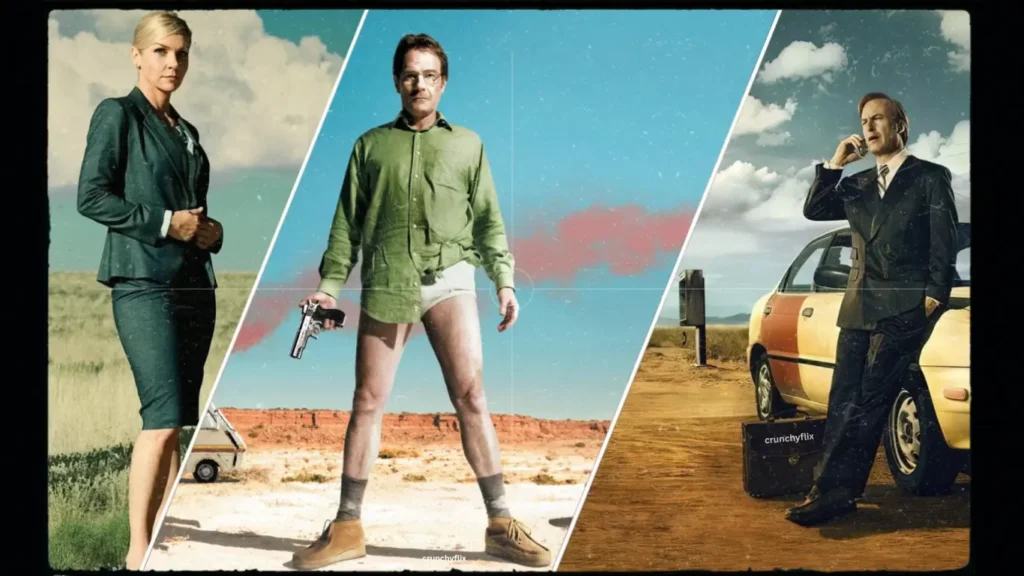
Breaking Bad centers tightly on Walter White’s transformation from chemistry teacher to criminal mastermind, with Jesse Pinkman serving as the emotional counterweight to Walt’s descent. Their relationship carries the show, and both arcs remain iconic — but the show’s supporting cast, while memorable, doesn’t receive the same depth of exploration.
Better Call Saul goes considerably further. Jimmy McGill’s slide into Saul Goodman is nuanced and gradual, but the show invests just as heavily in Kim Wexler — widely regarded as one of the best original characters in modern television — along with Mike Ehrmantraut’s richer, more heartbreaking backstory and Howard Hamlin’s arc, which subverts audience expectations entirely by the time his fate is revealed. On raw character depth, Better Call Saul is the clear winner.
Which did it better?
Better Call Saul: It takes character development to a truly elite level.
Pacing: Fast Thrills vs. Slow Burn
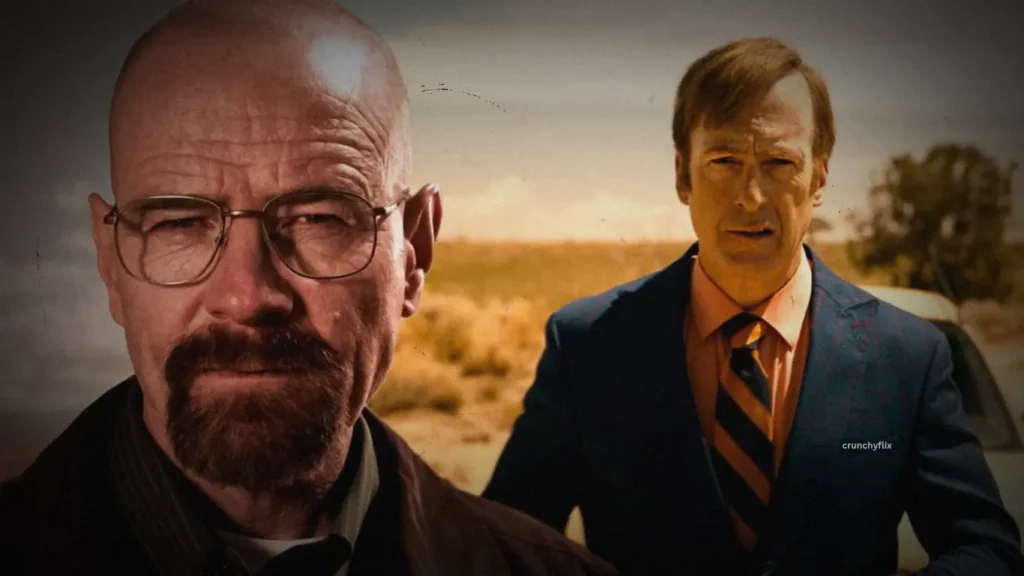
Breaking Bad is fast, propulsive, and built for bingeing — regular action, intense confrontations, minimal filler. Better Call Saul deliberately slows things down, spending long stretches on legal process, moral hesitation, and quiet tension rather than action. Some viewers find this frustrating; others consider it the show’s defining strength. On pure entertainment pacing, Breaking Bad wins. On depth and realism, Better Call Saul wins.
Which did it better?
Breaking Bad wins for entertainment pacing whereas Better Call Saul wins for depth and realism.
Villains: Iconic vs. Grounded
Breaking Bad’s rogues’ gallery is genuinely one of TV’s best: Gus Fring’s icy control, Todd Alquist’s unsettling calm, Lydia Rodarte-Quayle’s paranoia, the Salamanca twins, and Jack Welker’s brutal gang all feel larger than life and immediately memorable.
Better Call Saul’s antagonists operate on a more human, psychologically grounded scale — Lalo Salamanca’s charm masking real menace, Chuck McGill’s tragic, self-destructive resentment of his own brother, and Howard Hamlin functioning almost as a moral antagonist rather than a criminal one. Breaking Bad wins for sheer iconography; Better Call Saul wins for emotional and psychological complexity.
Which did it better?
Breaking Bad for iconics and Better Call Saul for realistic, emotionally layered antagonists.
Cinematography and Visual Storytelling
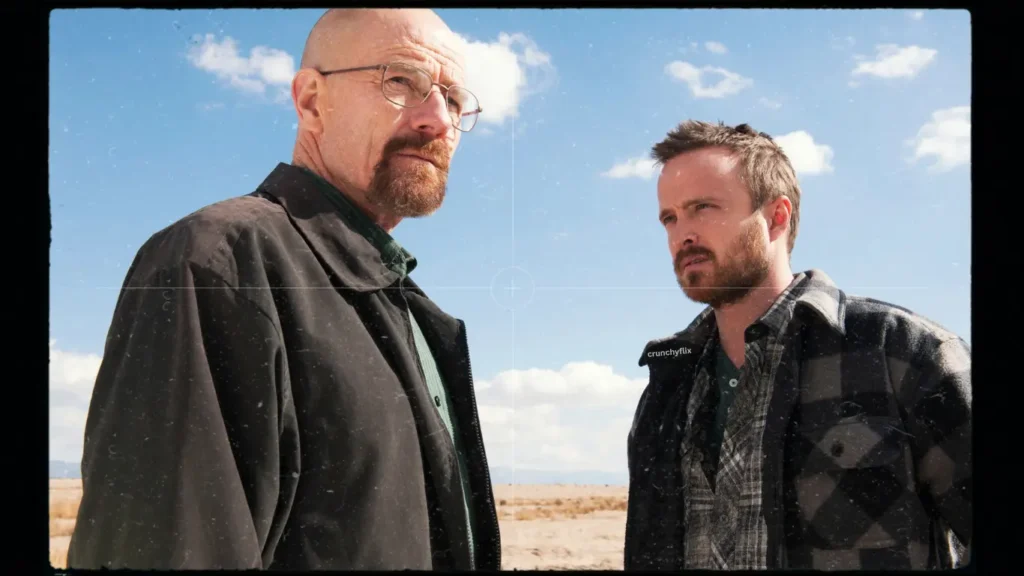
Both shows are visual landmarks for television, but they achieve it differently. Breaking Bad leans into bright, harsh desert tones, symbolic color palettes, and extreme environments that mirror its escalating stakes. Better Call Saul, working with a larger budget and more experienced crew inherited from its predecessor, pushes the visual language further — cleaner compositions, more deliberate symmetry, and a genuinely inventive use of silence and negative space. It’s a case of the spinoff building on the foundation the original laid and then exceeding it.
Which did it better?
Better Call Saul wins this one.
Breaking Bad Watch Guide in Depth
Emotional Payoff and Endings
Walter White’s ending is violent, poetic, and tragic — a fitting, cathartic conclusion for a morally corrupt genius who finally accepts what he’s become. It’s widely considered one of television’s greatest series finales.
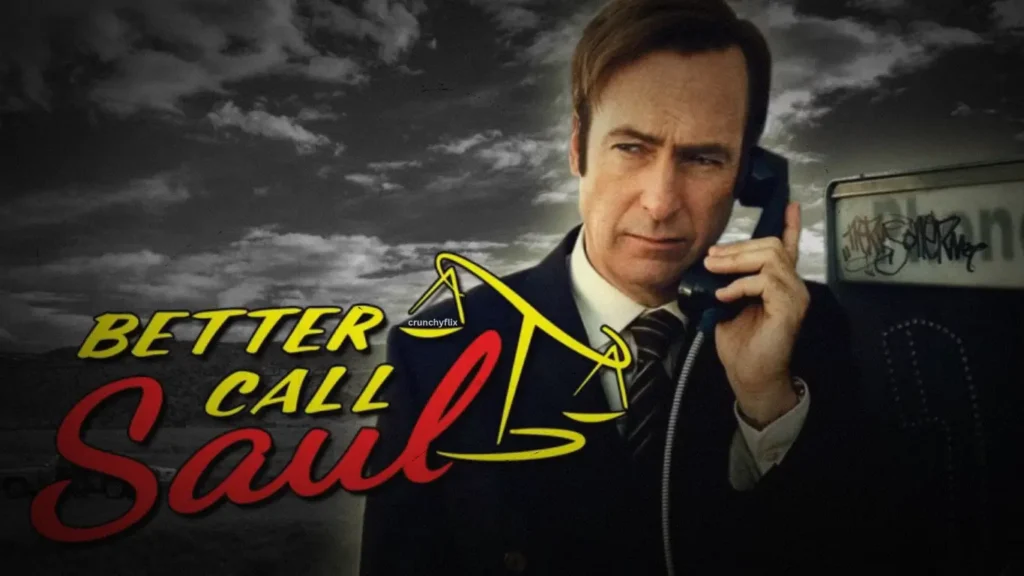
Better Call Saul’s ending takes a quieter, more devastating path: Jimmy finally accepts responsibility for his actions in a deeply personal, understated conclusion, and Kim’s final scene delivers an emotional gut-punch that many critics consider even more affecting than Walt’s. If Breaking Bad’s ending is cathartic in the way action and consequence usually are, Better Call Saul’s ending is cathartic in the way genuine, earned regret is.
Which did it better?
Better Call Saul delivers a more emotional, grounded, and cathartic finale.
Impact on Pop Culture
Breaking Bad achieved instant, mainstream cultural saturation — memes, endlessly quoted lines, Walter White becoming shorthand for the “antihero” archetype in modern television. Better Call Saul, while critically adored and often argued to be the more accomplished show, never reached the same mainstream ubiquity, remaining more of a prestige, cult-favorite achievement than a cultural phenomenon. On sheer reach, Breaking Bad wins decisively.
Which did it better?
Breaking Bad had the bigger cultural impact.
Is There More Coming to This Universe?
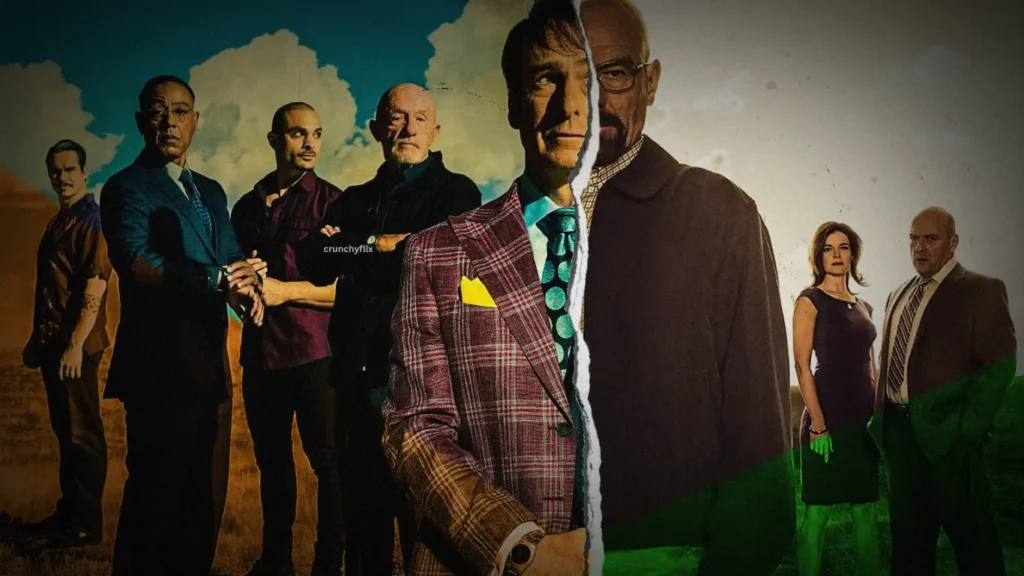
Worth addressing directly: both Vince Gilligan and Peter Gould have said, in the years since Better Call Saul ended, that they have no current plans for a further spinoff in this universe, while both have stopped short of ruling it out entirely. The one attempt at further expansion — Slippin’ Jimmy, a short animated anthology released alongside Better Call Saul’s final season — was a tonal departure that didn’t land well with fans. For now, this two-show comparison represents the complete Breaking Bad universe, with no announced third chapter on the horizon.
Winner of Each Category
| Category | Winner |
|---|---|
| Writing Quality | Better Call Saul |
| Character Development | Better Call Saul |
| Pacing | Breaking Bad |
| Villains | Breaking Bad (iconic) |
| Visual Storytelling | Better Call Saul |
| Emotional Payoff | Better Call Saul |
| Popularity & Cultural Impact | Breaking Bad |
Follow us on Social Media – Just Click the Icons Below
Final Verdict
In the end, the two shows don’t compete—they complete each other. Together, they form one of the greatest shared universes in TV history, with each series excelling in the areas the other leaves untouched. And that balance is what makes the Breaking Bad universe truly legendary. It’s impossible to declare an absolute winner because both shows excel in different areas. But if we break it down:
If you want thrills, iconic villains, and mainstream cultural weight, Breaking Bad takes the crown. If you want the deepest character work, the most refined visual craft, and the more devastating emotional payoff, Better Call Saul quietly wins. Together, rather than competing, they form one of the most complete, self-reinforcing achievements in television history — each show filling in exactly what the other leaves untouched.
There’s also something worth noting about how each show ages on rewatch. Breaking Bad tends to hit just as hard the second time, since its tension comes from watching Walt’s choices rather than not knowing what happens next. Better Call Saul actually improves on rewatch — small details, throwaway lines, and background moments reveal themselves as quiet foreshadowing once you know where Jimmy, Kim, and the rest end up. That’s a rare quality for television to pull off, and it’s part of why so many fans find themselves returning to Better Call Saul more often than they expected to.
Which show do you think ultimately did it better — the fireworks of Breaking Bad, or the slow-burn tragedy of Better Call Saul? Let us know in the comments.
Share on other Social Media Platforms