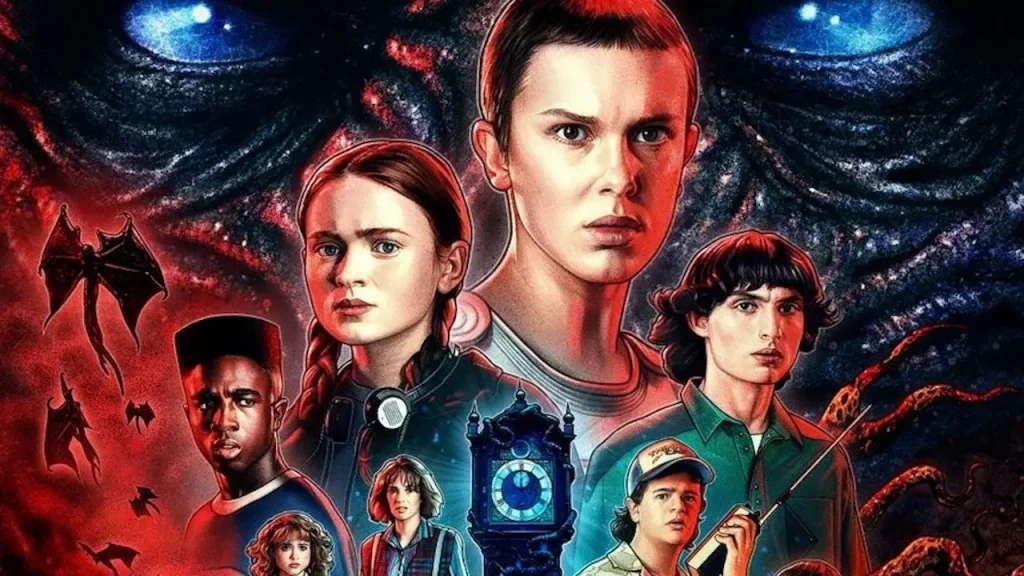
When Stranger Things premiered in 2016, no one expected a quiet, synth-heavy sci-fi series about missing kids and government experiments to become a cultural earthquake. What started as a love letter to the 1980s slowly evolved into one of the most influential television franchises of the modern era.
From basement Dungeons & Dragons games to globe-spanning fandoms, Stranger Things didn’t just entertain audiences — it reshaped how television is made, marketed, and emotionally experienced. As the show reached its final chapter in Season 5, it became clear: television will never look the same again.
Season 1: A Small Story That Changed Everything
Season 1 of Stranger Things felt different from anything else on TV at the time.
Instead of flashy spectacle, it focused on:
- Ordinary kids in a small town
- Slow-burn mystery
- Practical effects
- Genuine friendships
- Emotional stakes that felt real
Reddit fans often point out that Season 1 felt grounded and intimate, almost like an indie film stretched across episodes. That authenticity helped audiences emotionally invest before the supernatural elements fully took over. More importantly, Season 1 proved something revolutionary:
A streaming-only show could feel cinematic, emotionally deep, and culturally important.
This was a turning point not just for Netflix — but for television as a whole.
Redefining Streaming Success & Binge Culture
Before Stranger Things, binge-watching was a novelty. After it, binge-watching became the standard.
How Stranger Things changed streaming:
- Entire seasons dropping at once became mainstream
- Viewers discussed episodes simultaneously worldwide
- Shows were judged by cultural impact, not weekly ratings
- Netflix proved global hits didn’t need network TV
Multiple seasons of Stranger Things frequently appeared in Netflix’s Top 10 at the same time, something unheard of in traditional television models.
The show became a blueprint:
Big budget + serialized storytelling + emotional payoff = global obsession
Genre Storytelling: Nostalgia Meets Modern Television
One of the show’s greatest achievements was how it blended genres without feeling messy.
Stranger Things combined:
- Science fiction
- Horror
- Mystery
- Coming-of-age drama
- Emotional family storytelling
The Duffer Brothers borrowed heavily from 80s pop culture — Stephen King, E.T., The Goonies — but modernized it with:
- Long-form character arcs
- Layered mythologies
- Cinematic pacing
- Darker emotional themes
This “mystery box” approach — where questions lead to deeper questions — influenced countless streaming shows that followed.
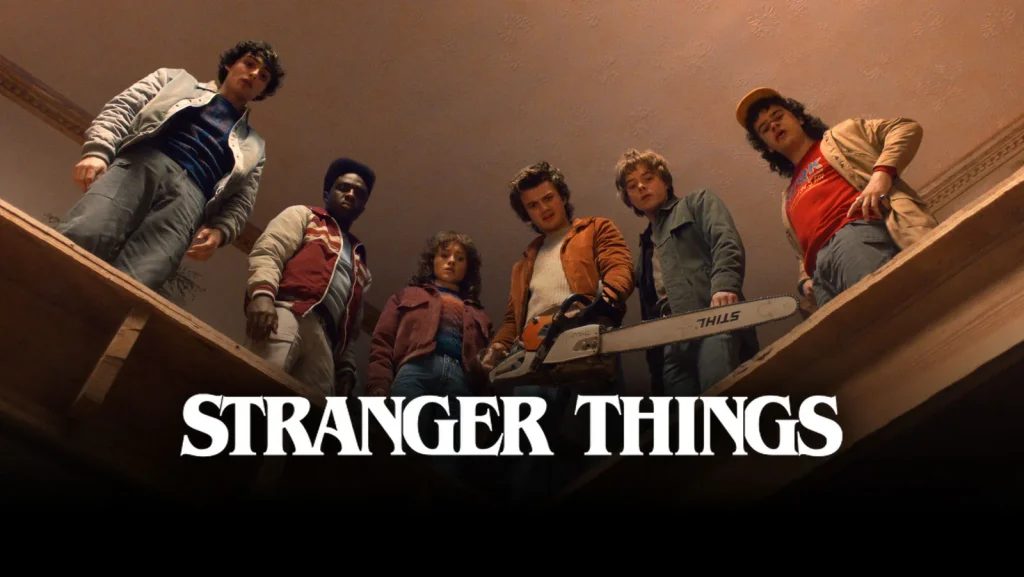
From Kids on Bikes to Cinematic Spectacle (Season 2–4 Evolution)
As the seasons progressed, Stranger Things scaled up dramatically.
What changed over time:
- Larger budgets
- Bigger monsters
- International locations
- Feature-film-level visuals
- Longer, more ambitious episodes
Some fans debate whether the show lost its simplicity — a common Reddit discussion — but most agree that the emotional core remained intact. Characters like: Eleven, Dustin, Max, Steve, Hopper continued to anchor the spectacle with genuine human emotion.
Music, Fashion & Pop Culture Resurrection
Very few TV shows have revived pop culture the way Stranger Things did.
Music Impact
Kate Bush’s Running Up That Hill re-entered global charts nearly 40 years after release — purely because of a single emotional scene. That moment proved:
Television can directly reshape music history.
Fashion & Aesthetic Influence
The show sparked:
- 80s fashion revivals
- Retro color palettes
- Synthwave aesthetics
- Vintage merchandise booms
TikTok, Instagram, and Pinterest exploded with Stranger Things-inspired aesthetics, influencing youth culture worldwide.
Dungeons & Dragons: From Niche to Mainstream
Before Stranger Things, D&D was still seen as niche or nerd-only.
After the show:
- D&D searches skyrocketed
- New players joined in record numbers
- Tabletop gaming entered pop culture again
The basement scenes weren’t just nostalgia — they redefined geek culture as cool, emotional, and social.
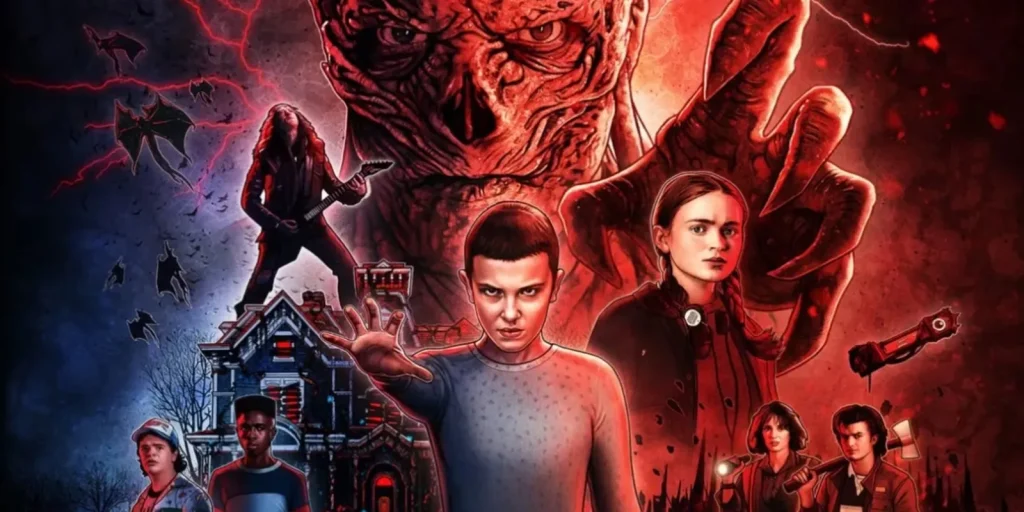
The Rise of Global Fandom Culture
Stranger Things didn’t just build viewers — it built communities.
Across:
- TikTok
- Quora
- YouTube
Fans created:
- Theory breakdowns
- Ending predictions
- Character essays
- Emotional reaction videos
- Memes that became cultural language
The show proved that modern TV doesn’t end with the episode — it lives online. Fan discourse became part of the experience itself.
Economic & Industry Impact
Behind the scenes, Stranger Things transformed the entertainment economy.
Industry Effects:
- Thousands of production jobs created
- Filming locations turned into tourist destinations
- Massive merchandise empires
- Theme park experiences
- Stage productions and spin-offs
Season 5: An Ending That Redefined TV Finales
Season 5 of Stranger Things wasn’t just about wrapping up plot threads — it felt like the end of an era for an entire generation of viewers. The finale hit hard emotionally, leaving many fans devastated yet grateful, overwhelmed by nostalgia and the weight of saying goodbye to characters they had grown up with. Instead of offering neat, over-explained answers, the show chose a bittersweet and slightly ambiguous ending, trusting the audience to sit with their feelings rather than be spoon-fed closure. That creative risk sparked intense debate across social media, Reddit, and fan forums, but the very existence of that debate proved how deeply Stranger Things mattered.
Few TV finales divide, haunt, and stay with audiences long after the credits roll and that’s exactly why Season 5 redefined what a modern television ending can be. Season 5 wasn’t just about closing the story — it was about closing an era. Rather than over-explaining everything, Stranger Things trusted its audience to feel the ending. That choice sparked debate — and debate itself proved how deeply the show mattered.
Why Stranger Things Changed Television Forever
Stranger Things changed television because it proved that:
- Streaming shows can become generational icons
- Nostalgia can be meaningful, not lazy
- Emotional storytelling matters more than spectacle
- Fandom is part of modern storytelling
- TV can shape culture, not just reflect it
It didn’t just follow trends — it created them.
A Once-in-a-Generation Series
From a missing kid in Hawkins to a global cultural phenomenon, Stranger Things became more than a TV show.
It became:
- A shared emotional memory
- A cultural reset
- A symbol of modern television’s power
Years from now, people won’t just ask what they watched — they’ll remember how it made them feel and that’s how Stranger Things changed television forever.
SHARE ON OTHER SOCIAL PLATFORMS
FAQ’S
Stay in the Loop!
📩 Join Our WhatsApp Channel for Anime & TV Series Updates
🔗 Follow Us on Instagram, Facebook & Pinterest
🛒 Support us → [Love what we do? Support Crunchyflix on Patreon]