
One Piece: Into the Grand Line released globally on Netflix on March 10, 2026, and the question this article originally set out to answer — how different would Season 2 actually be from the anime — now has real, reviewed answers instead of pre-release speculation. Multiple outlets have called it an improvement on an already well-received first season, and the specific changes fans were bracing for landed largely as expected. Here’s the full, confirmed comparison of one piece live action vs anime.
Confirmed and now reviewed: Season 2 released March 10, 2026, and multiple outlets are calling it an improvement on Season 1 — bigger stakes, a more cohesive Baroque Works throughline, and a widely praised, emotionally vulnerable take on Chopper voiced by Mikaela Hoover. The predicted trade-offs (faster pacing, condensed arcs, toned-down comedy) held up exactly as expected.

The One Piece Live Action vs Anime debate has followed this show since Season 1, and Season 2 was always going to be the real test of that comparison. Where the anime has the freedom to spend dozens of episodes on a single island, the live-action version has to compress that same emotional and narrative ground into a handful of hours — and that structural gap is really what the entire One Piece Live Action vs Anime conversation comes down to. It’s less about which version is “more faithful” and more about which trade-offs each format is forced to make.
Once you actually watch Season 2 with that framing in mind, the One Piece Live Action vs Anime comparison stops feeling like a competition and starts feeling like two different tools built for two different jobs. The anime rewards patience and depth for viewers who already love the world; the live-action version rewards momentum and accessibility for viewers meeting Luffy and the Straw Hats for the first time. Season 2 leans hard into that second goal, and reviewers largely agree it succeeds — which is ultimately the fairest way to settle the One Piece Live Action vs Anime question for good.
Confirmed Info – Netflix One Piece Live Action Season 2
Official Title & Release Date
The Official Confirmed Details:
- Title: One Piece – Into the Grand Line
- Release Date: March 10, 2026
Arcs Adapted
One Piece Live Action Season 2 adapts multiple major arcs from the manga and anime, making it far more expansive than Season 1.
- Loguetown Arc
- Reverse Mountain (Twin Capes)
- Whiskey Peak
- Little Garden
- Drum Island
In anime terms, this covers dozens of anime episodes —into a single eight-episode Netflix season.
Character Changes: What Actually Landed
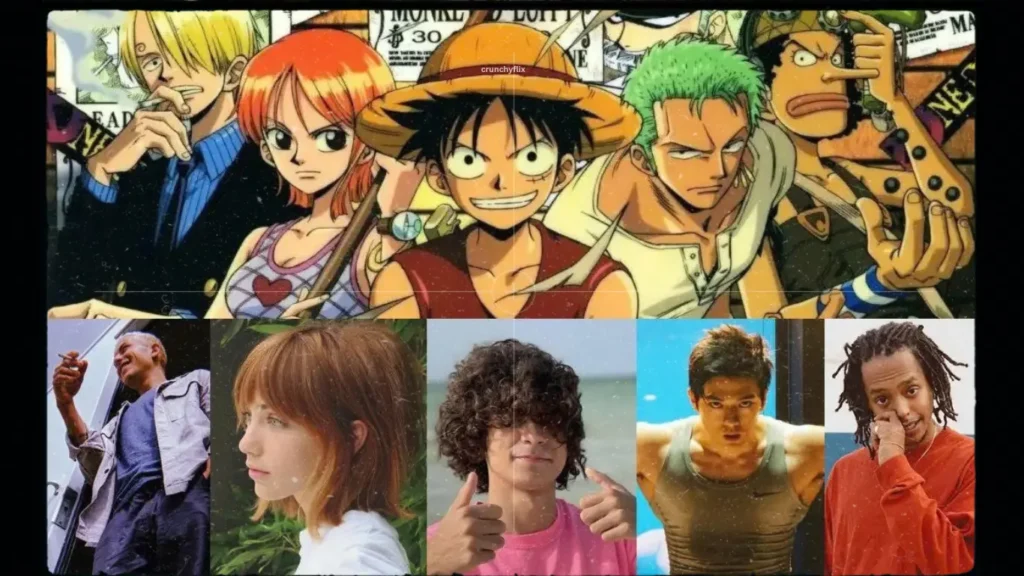
Iñaki Godoy’s Luffy continued the grounded, emotionally expressive approach established in Season 1, described by one reviewer as capturing the spirit of the source material “without copying the anime’s louder extremes” — exactly the balance the pre-release framing predicted. Tony Tony Chopper, always going to be the season’s biggest adaptation challenge, arrived in Episode 6 through a combination of CGI and motion capture, voiced by Mikaela Hoover. The performance has been singled out repeatedly by critics for its vulnerability, with reviewers specifically praising how it leans into Chopper’s loneliness and his bond with Dr. Hiriluk rather than the anime’s more exaggerated comedic beats — confirming the predicted shift in emphasis nearly exactly.
Nami, Zoro, and Sanji all received the deepened character work anticipated ahead of release, with Emily Rudd’s Nami and Mackenyu’s Zoro specifically called out as the show’s emotional and stoic anchors respectively in multiple reviews.
One Piece Anime Filler Episode List
New Cast Confirmed
Beyond the returning Straw Hats, the season introduced Charithra Chandran as Princess Vivi (Miss Wednesday) and Lera Abova as Nico Robin (Miss All Sunday), both singled out by critics as standout new additions. Smoker and Tashigi were expanded into recurring pursuer roles across the season, giving the Baroque Works conspiracy plotline a more persistent, serialized throughline than the source material’s more episodic early structure — a deliberate structural change that reviewers generally credited as effective rather than a compromise.

Character Changes: Who Feels Different in Live Action Season 2?
Monkey D. Luffy
- Anime Luffy: exaggerated optimism, cartoonish expressions
- Live Action Luffy: grounded, emotionally expressive, more human
Netflix leans into Luffy’s leadership and emotional intelligence, especially important in arcs like Drum Island.
Tony Tony Chopper (The Biggest Change)
Chopper is arguably the hardest character to adapt. As Anime Chopper is cute, expressive, exaggerated reactions whereas Live Action Chopper is a combination of CGI + motion capture, more realistic proportions to focus on:
- Chopper’s loneliness
- His bond with Dr. Hiriluk
- His struggle with being “different”
Nami, Zoro & Sanji
Season 2 deepens character arcs rather than reset them:
- Nami becomes more confident as a navigator
- Zoro’s loyalty to Luffy becomes more explicit
- Sanji’s moral code and compassion are emphasized
Netflix favors character-driven drama over anime-style exaggeration.
How One Piece Live Action vs Anime Differences Actually Played Out
The predicted pacing philosophy held up precisely: fewer episodes, faster narrative progression, and a focus on essential emotional and plot beats rather than a scene-by-scene translation. Reviewers noted the early episodes feel “busy” and occasionally “overstuffed” as a direct consequence, with Loguetown compressed into more of a dense prologue than a fully standalone arc — but most found the trade-off worthwhile given the format constraints of adapting an inherently episodic, island-hopping story into a single season.
On tone, the anticipated shift toward grounded performances and reduced visual comedy also held, with Drum Island in particular pushing the season toward the darker, more emotional register predicted ahead of release. On action, reviews confirmed the season saved its biggest visual effects investment for major set pieces — Laboon the whale, the dinosaurs and giants of Little Garden, and Chopper himself — rather than spreading CGI evenly throughout, matching the “controlled CGI usage” approach anticipated.
Fan and Critical Consensus
The dominant read from both fan communities and critics has been consistent: treating the live-action as its own parallel version of One Piece, rather than expecting a 1:1 retelling, produces a much better viewing experience. Reviews from outlets with no prior anime or manga familiarity were especially positive, several explicitly noting they walked in with zero expectations and came away calling the season “fantastic” — arguably the strongest evidence yet that Netflix’s stated goal of using live-action as an accessible entry point for global audiences, distinct from the anime’s role serving longtime fans, is actually working as intended.
| Outlet | Verdict |
|---|---|
| Nerdist | 5 stars — “bigger, better, more ambitious” |
| Absolute Geeks | “Exactly the upgrade this adaptation needed” |
| Gulf News | “Best live-action adaptation yet” |
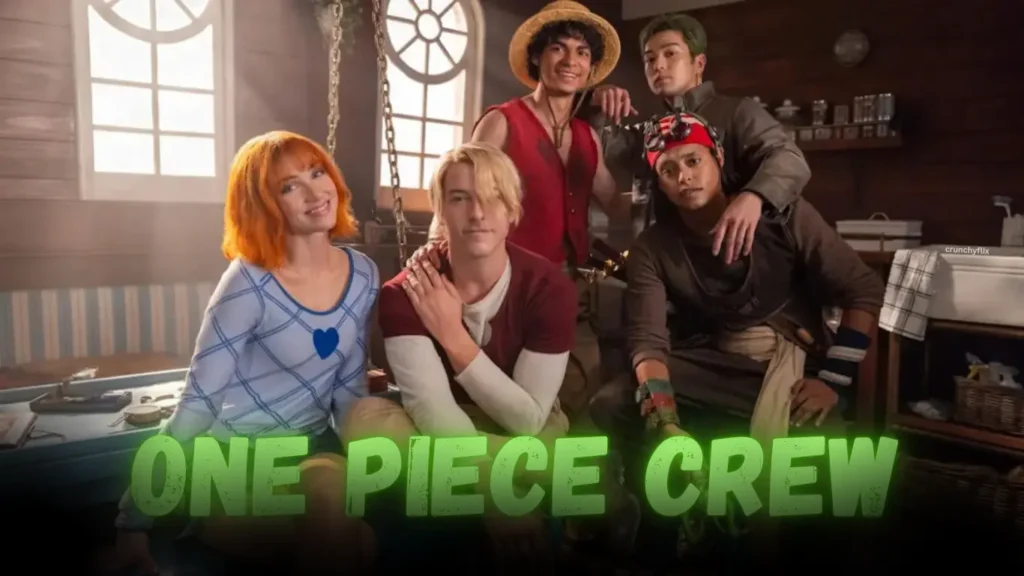
Returning & New Cast: Expanding the One Piece World
Returning Straw Hats
All core Straw Hat actors return:
- Monkey D. Luffy
- Roronoa Zoro
- Nami
- Sanji
- Usopp
Major New Characters in Season 2
Netflix is significantly expanding the cast, including:
- Princess Vivi
- Nico Robin
- Smoker
- Baroque Works agents, including Mr. 3
- Tony Tony Chopper: Fully CGI with motion capture. Performance by Mikaela Hoover
These characters introduce political intrigue, moral ambiguity, and long-term plot threads, pushing the live action closer to the anime’s larger narrative scope.
What’s Confirmed for the Franchise’s Future
Netflix’s long-term commitment to the franchise has only solidified since Season 2’s release — Season 3 was already renewed and began filming in Cape Town in November 2025, positioning the show to tackle the full Alabasta Saga next. Internally, Netflix’s stated ambition remains a multi-season adaptation spanning potentially 10 or more seasons if the series continues performing. This long-term strategy explains why Netflix prioritizes streamlined storytelling over strict scene-by-scene accuracy.
One Piece Live Action vs Anime
Pacing & Structure – What the Season 1 Covered:
- ~100 manga chapters / ~45 anime episodes
- Condensed into 8 live-action episodes
Season 2 will follows the same philosophy:
- Fewer episodes
- Faster narrative progression
- Focus on key emotional and plot beats
A Quick Comparison Table (One Piece Live Action vs Anime)
| Aspect | Anime | Live Action |
|---|---|---|
| Pacing | Slow, detailed | Fast, condensed |
| Comedy | Exaggerated | Subtle |
| Emotional Scenes | Gradual | Intense |
| Action | Spectacle-heavy | Grounded |
| Target Audience | Anime fans | Global viewers |
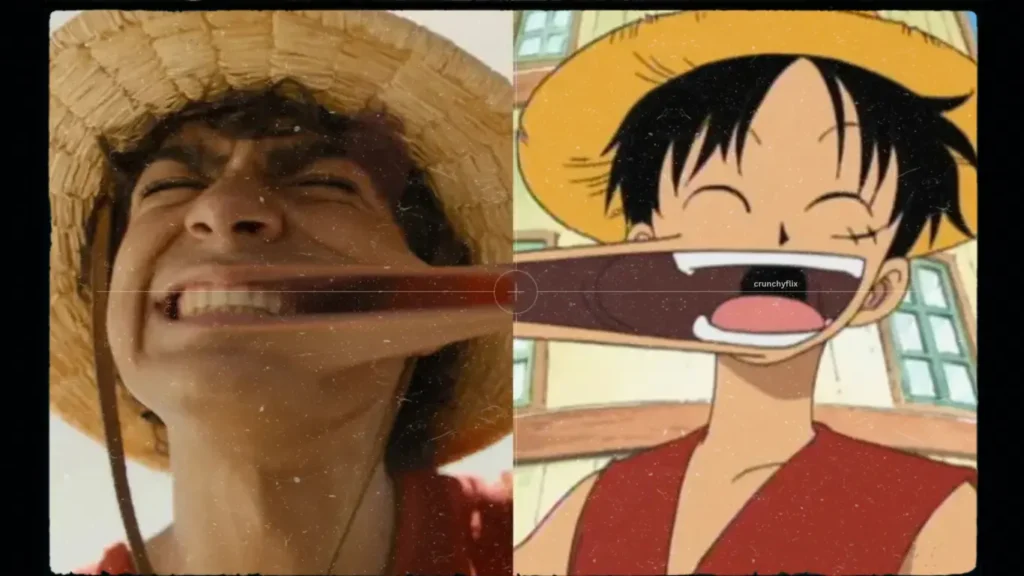
One Piece Live Action vs. Anime: Which Is Actually Better?
The honest answer, now backed by actual released content rather than speculation, remains the same as before: there’s no clean winner, because the two versions are optimized for different things. The anime offers unmatched scale and depth for long-time fans; the live-action delivers a tighter, more emotionally direct retelling built to welcome newcomers. With Season 2’s reception confirming that Chopper and Drum Island — the two elements the pre-release predictions flagged as the biggest tests — both landed well with critics, Netflix’s One Piece looks increasingly secure in its place as one of the strongest live-action anime adaptations made so far.
Why These Changes Actually Make Sense
Netflix isn’t trying to replace the anime.
Instead:
- The anime serves long-term fans
- The live action introduces One Piece to a global audience
- Both versions strengthen the franchise
Season 2 represents the moment where this strategy is fully tested.
Follow us on Social Media – Just Click the Icons Below

Looking Ahead: What This Means for the Franchise
What makes the One Piece Live Action vs Anime comparison genuinely worth revisiting isn’t just Season 2’s success — it’s what that success signals about how adaptations like this can work going forward. For years, “live-action anime adaptation” was almost a punchline in fan communities, a genre defined more by its failures than its wins. Netflix’s One Piece has quietly rewritten that expectation twice now, first with Season 1 proving the concept could work at all, and now with Season 2 proving it could actually improve on itself rather than coast on goodwill.
That matters beyond this one show. Studios have several other manga and anime properties in various stages of live-action development, and many are watching how audiences respond to Into the Grand Line as a kind of blueprint for handling their own version of the One Piece Live Action vs Anime question. The choices made here — condensing arcs rather than padding them, letting character work carry emotional scenes instead of leaning on visual spectacle, treating the live-action version as a companion piece rather than a replacement — are exactly the kind of decisions other adaptations have historically gotten wrong.
For longtime fans, the more interesting question going forward isn’t really which version is better. It’s whether Netflix can sustain this quality once the story reaches its more narratively complex later arcs, where political intrigue, large ensemble casts, and years-spanning backstories make faithful adaptation exponentially harder. Alabasta, confirmed for Season 3, will be the first real test of that.
If Season 3 handles that transition as well as Season 2 handled the jump into the Grand Line, this won’t just be a good live-action version of a beloved story — it’ll be one of the rare cases where a franchise successfully told the same story twice without either version feeling like the lesser one.
Conclusion
So to sum up the One piece live action vs anime debate, so the set of predictions about how Season 2 would differ from the anime is now a confirmed, reviewed reality — and nearly every anticipated change landed close to how it was expected to. Faster pacing, condensed arcs, a more grounded Chopper, and a persistent Baroque Works threat all arrived roughly as predicted, and critics have largely rewarded the approach. With Season 3 already filming and Alabasta on the horizon, Netflix’s One Piece experiment looks less like a gamble now and more like a genuinely sustainable format.
Did Season 2 win you over more than Season 1 did, or do you think something got lost in the translation to live action? Let us know in the comments.
Share on other Social Media Platforms