
Historical romance anime tends to fall into one of two camps: stories that wear their emotions on their sleeve, and stories that make you dig for every scrap of feeling. My Happy Marriage and The Apothecary Diaries are arguably the two best current examples of each camp, which is exactly why fans keep pitting them against each other. Both are set in loosely historical, fantasy-adjacent worlds, both center a female lead navigating a rigid social structure, and both have built passionate followings — but the actual experience of watching them is almost nothing alike. Here’s a full breakdown of how they differ, so you can figure out which one actually fits what you’re in the mood for.
Neither is objectively “better” — they’re built on opposite romance mechanics. Pick My Happy Marriage if you want raw emotional catharsis and a clear healing arc. Pick The Apothecary Diaries if you want wit-driven tension where almost nothing is stated outright. If you need closure fast, Apothecary Diaries’ romance moves noticeably slower across its run.
Setting the Stage: What Each Series Is Actually About
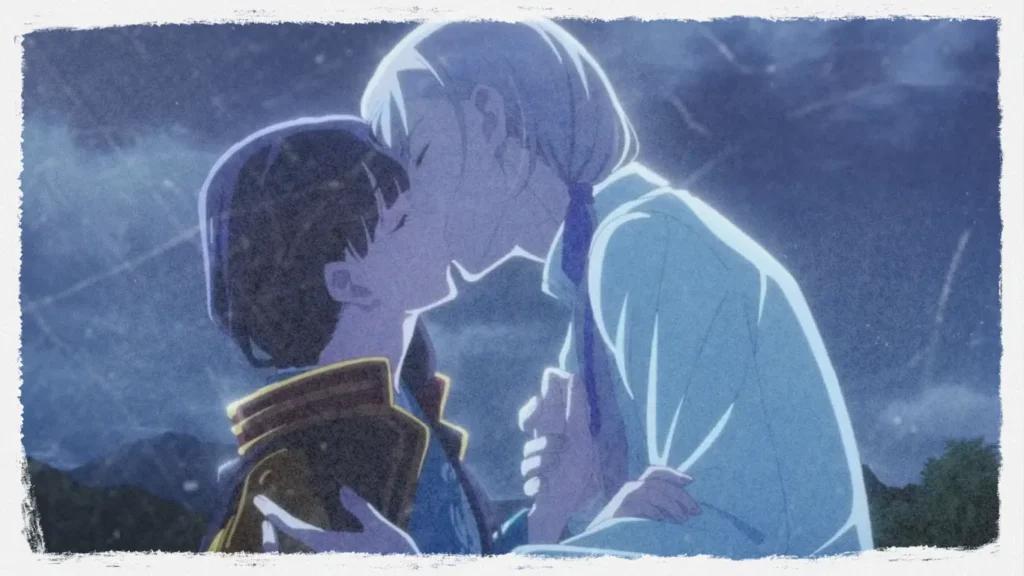
My Happy Marriage
My Happy Marriage follows Miyo Saimori, a young woman pushed into an arranged marriage with Kiyoka Kudou, a military commander with a fearsome reputation. Miyo arrives at the marriage already worn down by years of mistreatment from her own family, expecting Kiyoka to be just another source of cruelty. Instead, the story spends its runtime slowly dismantling that expectation, as the two of them build trust despite neither having much practice at receiving kindness. The throughline is explicitly about healing — from family trauma, from isolation, from a life spent believing you’re not worth caring for.
- Key Themes:
- Overcoming abuse and trauma
- Finding love and acceptance
- The power of emotional healing
- Romance Style: Intense emotional journey, focused on character development.
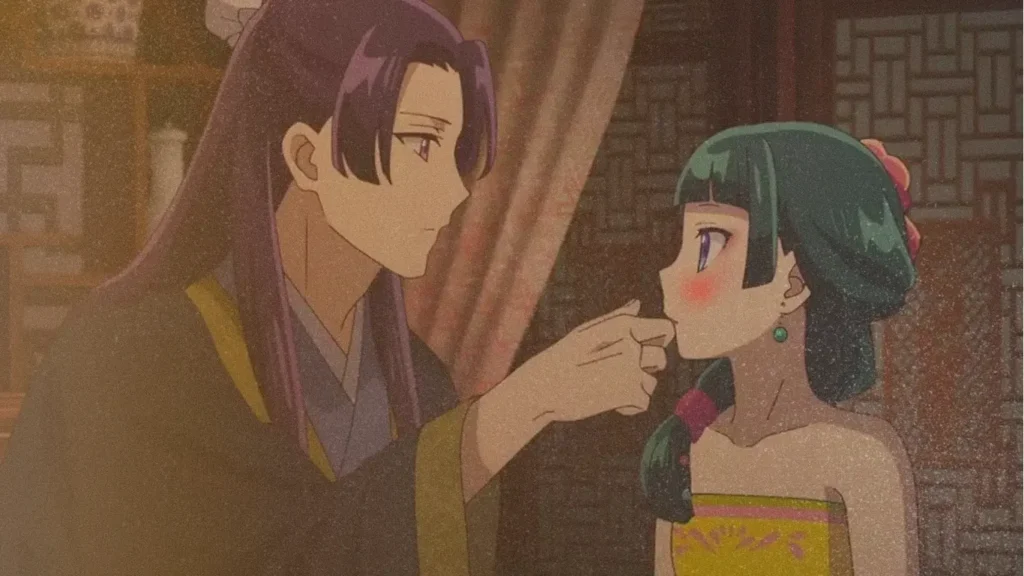
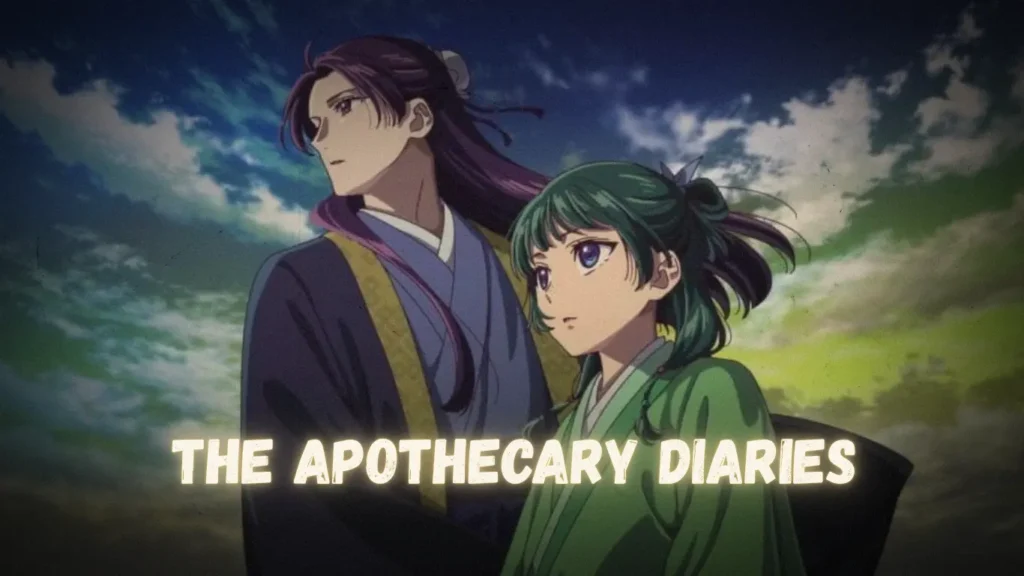
The Apothecary Diaries
The Apothecary Diaries takes a completely different entry point. Maomao, a skilled apothecary with a sharp, occasionally reckless curiosity, ends up working as a servant in the imperial palace after being kidnapped and sold into service. Her medical knowledge and instinct for solving strange cases quickly draw the attention of Jinshi, an unusually beautiful and influential court official whose actual role in the palace is deliberately kept murky for much of the story. Their relationship develops almost entirely as a byproduct of the show’s real engine, which is palace intrigue and mystery-of-the-week plotting. Romance here is a slow accumulation of small moments rather than a central plotline.
- Key Themes:
- Intellectual connection and wit
- Mystery and political intrigue
- Slow-burn romance
- Romance Style: Subtle and gradual, intertwined with a captivating mystery.
A Quick Comparison
| Factor | My Happy Marriage | The Apothecary Diaries |
|---|---|---|
| Romance pace | Steady, emotionally direct | Very slow burn, mostly implied |
| Core hook | Trauma healing, found family | Mystery-solving, palace intrigue |
| Lead dynamic | Vulnerability meeting protectiveness | Wit against wit, rank as barrier |
| Best for viewers who… | Want a clear emotional payoff | Enjoy mystery as much as romance |
Character Dynamics: What’s Actually Driving the Chemistry
Miyo and Kiyoka’s relationship works because of contrast: Miyo enters the marriage expecting cruelty and instead finds someone quietly, sometimes clumsily, trying to protect her. Kiyoka isn’t naturally warm — he’s blunt, work-obsessed, and has his own unresolved baggage — but the show is careful to show him actively choosing to be gentle with Miyo even when it doesn’t come naturally to him. That effort is a big part of why the pairing lands emotionally: it’s not instant compatibility, it’s two damaged people learning to be safe with each other on purpose.
Maomao and Jinshi run on a completely different engine — intellectual sparring. Maomao is sharper than almost everyone around her and has zero patience for flattery or court games, which makes her one of the only people who treats Jinshi like a person instead of a status symbol. Jinshi, for his part, seems increasingly drawn to being around someone who isn’t performing deference. Nothing about their dynamic is stated outright for a long stretch of the story — it has to be read in banter, in who notices what, in small gestures that could just as easily be professional courtesy. That ambiguity is the whole appeal for viewers who like this style, and the exact reason it can feel frustratingly slow for viewers who don’t.
What Both the Animes Have to Offer
| Reasons to Love “My Happy Marriage” | Reasons to Adore “The Apothecary Diaries” |
|---|---|
| Heartwarming Character Growth: Miyo’s transformation is truly inspiring. | Playful Chemistry: The dynamic between Maomao and Jinshi is delightful. |
| Gradual Romance: The slow burn is incredibly satisfying. | Subtle Romance: Builds slowly and satisfyingly. |
| Emotional Depth: The characters’ struggles resonate deeply. | Complex Characters: Everyone has their own secrets and motivations. |
| Supernatural Elements: Adds a unique layer of intrigue. | Intelligent Protagonist: Maomao’s wit is unmatched. |
| Relatable Protagonist: Miyo’s journey is universally appealing. | Intriguing Mysteries: Keeps you guessing until the end. |
| The Power of Kindness: Shows how kindness can transform lives. | Unique Perspective: Offers a fresh take on historical drama. |
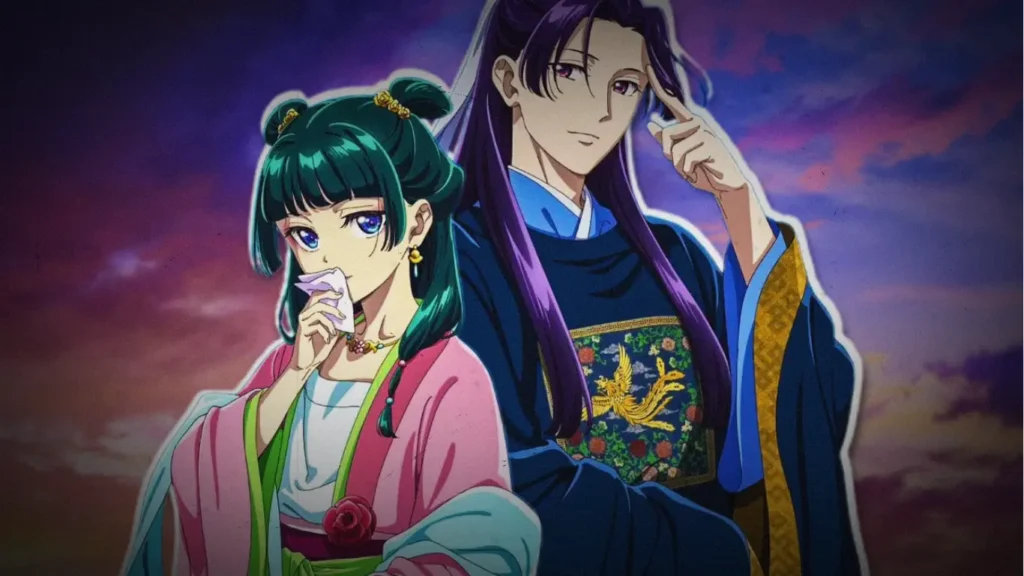
What Each Series Does Especially Well
My Happy Marriage leans into heartwarming character growth, with Miyo’s transformation from someone who’s internalized years of neglect into someone capable of trusting and being trusted forming the emotional backbone of the whole story. It pairs that with a found-family structure — the Kudou household gradually becomes the safe, accepting environment Miyo never had — and layers in light supernatural elements tied to Miyo’s own suppressed abilities, giving the plot a bit of forward momentum beyond the central relationship.
Know Everything About: “My Happy Marriage”
The Apothecary Diaries leans into playful chemistry and genuinely clever mystery writing. Maomao’s wit carries most scenes even when Jinshi isn’t in them, and the show’s supporting cast is stacked with characters who all have their own motives and secrets worth tracking. The mysteries themselves are frequently the strongest material in any given episode, built around historically-grounded medical or forensic knowledge that makes Maomao’s problem-solving feel earned rather than convenient.
Know Everything About: “The Apothecary Diaries”
Themes and Tropes Worth Knowing Going In
My Happy Marriage uses the arranged-marriage trope as a vehicle rather than an obstacle — the marriage itself isn’t the conflict, it’s the setting that forces two isolated people into close enough proximity to actually heal. Overcoming trauma sits at the center of Miyo’s arc specifically, and the found-family angle gives the story a warmth that keeps the heavier material from feeling relentless.
The Apothecary Diaries is more interested in intellectual connection and the social barriers that come with rank. Maomao and Jinshi’s dynamic exists across a real gap in status that the show doesn’t pretend isn’t there, and the mystery-and-intrigue structure means the “romance plot” is constantly sharing screen time with palace politics, poison cases, and succession disputes — which is either a feature or a distraction depending on what you came for.
Visual and Audio Style
My Happy Marriage favors elegant, softer character designs with a visually polished aesthetic that leans into its more intimate, domestic scenes, paired with a gentler, more melodic score that underlines the emotional beats. The Apothecary Diaries instead invests more visibly in detailed backgrounds and period-accurate settings, with expressive character animation doing a lot of the comedic and dramatic heavy lifting, backed by a more varied soundtrack that shifts tone to match whichever mystery is currently unfolding. Both series use music thoughtfully, but they’re clearly built with different priorities — mood-setting for My Happy Marriage, scene-specific tension for Apothecary Diaries.
Which One Should You Actually Watch First?
If you want a romance that gives you clear emotional beats and a satisfying, visible arc — someone going from guarded to genuinely loved, told relatively directly. My Happy Marriage is going to feel far more immediately rewarding. It doesn’t ask you to wait long stretches for confirmation of anything; you can feel the relationship progressing scene to scene.
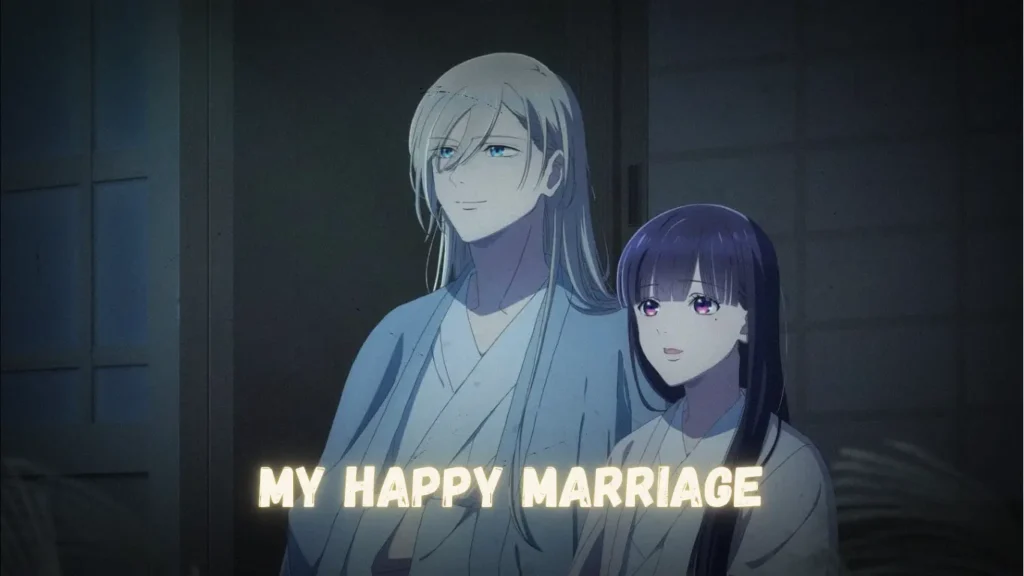
If you’d rather earn your romantic payoff slowly, and you don’t mind (or actively enjoy) a show that spends most of its energy on mystery plots and court politics instead of the central pairing, The Apothecary Diaries rewards patience in a way few other current series do. Just know going in that overt romantic material is genuinely sparse for long stretches — this is a show where you’re often reading subtext rather than watching a stated relationship unfold.
Follow us on Social Media – Just Click the Icons Below
Conclusion
There’s no version of this comparison where one show is simply better than the other — they’re solving for different things. My Happy Marriage wants you to feel something directly and often; The Apothecary Diaries wants you to lean in and pay attention. If you’re choosing based on mood tonight, ask yourself whether you want catharsis or curiosity, because that’s really the entire decision.
Which one hit harder for you — Miyo and Kiyoka’s slow healing, or Maomao and Jinshi’s unspoken tension? Let us know in the comments.
SHARE ON OTHER SOCIAL MEDIA PLATFORMS
Thanks for sharing. I read many of your blog posts, cool, your blog is very good.
Thanks for sharing. I read many of your blog posts, cool, your blog is very good.